
Elite Handling Solution » Electric Stacker Buying Guide: Capacity, Lift Height and Warehouse Compatibility
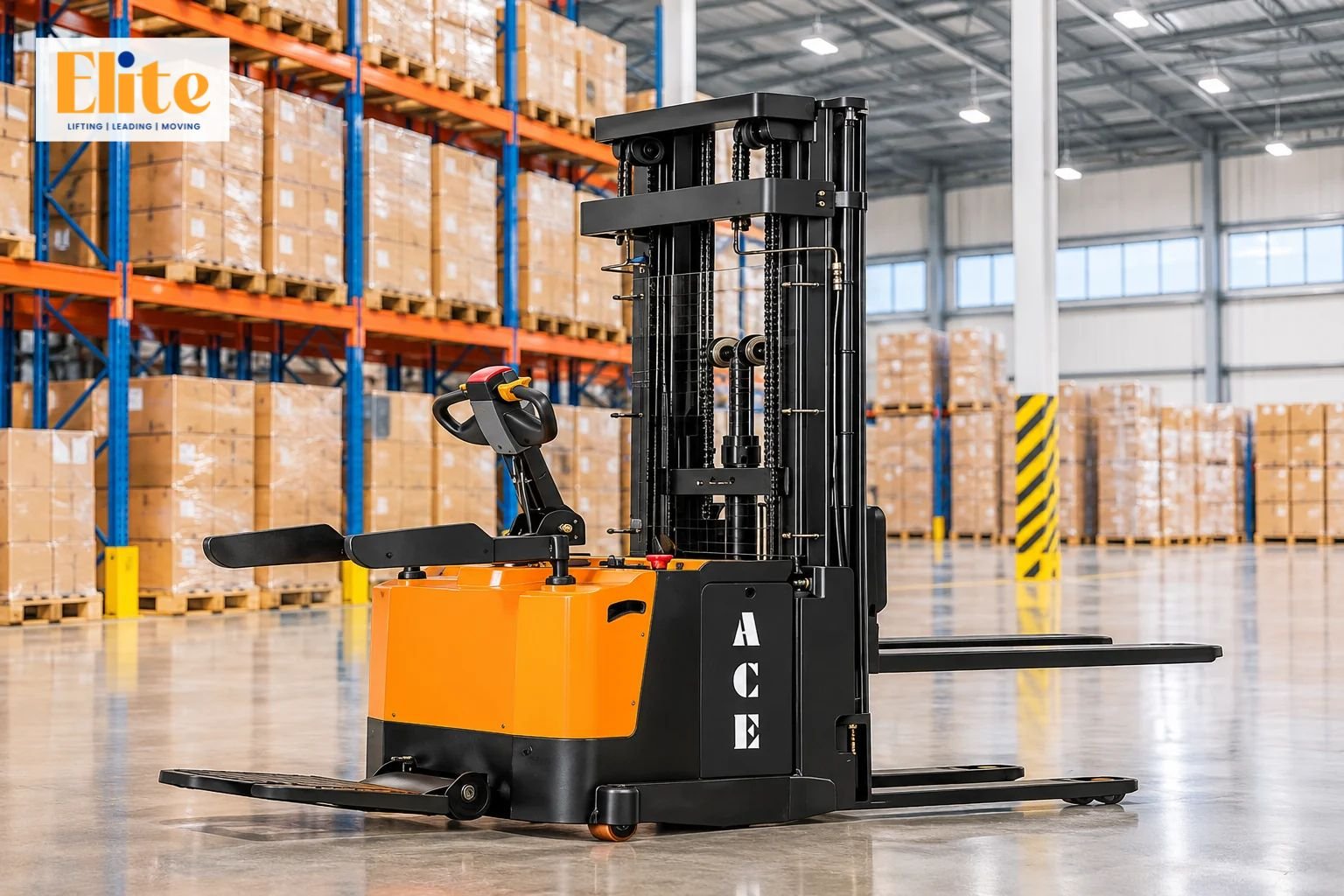
Efficient material handling is essential for warehouses, manufacturing facilities, distribution centres, and logistics operations. As businesses manage increasing inventory volumes and limited storage space, choosing the right equipment becomes important for maintaining smooth warehouse operations. An electric stacker can help businesses lift, move, and stack palletized goods according to their storage and handling requirements.
However, purchasing an electric stacker machine involves more than comparing prices or maximum load capacities. Buyers must evaluate electric stacker capacity, lift height, pallet dimensions, aisle width, floor conditions, and daily operating requirements. Selecting equipment that does not match these factors can create handling difficulties and restrict warehouse operations.
This electric stacker buying guide explains the essential factors to consider before purchasing an electric stacker for warehouse applications. It also provides practical advice to help warehouse managers, procurement teams, and industrial buyers identify suitable equipment for their operations.
An electric stacker is material handling equipment designed to lift, transport, and stack palletized goods. Depending on the model, electrical power operates the lifting mechanism and may also power the machine’s travel. These machines are commonly used in warehouses, manufacturing plants, distribution centres, and industrial storage facilities.
Compared with manual stackers, electric stackers reduce the need for manual lifting operation and can support repetitive pallet-handling tasks. Semi-electric stackers typically use powered lifting with manual travel, while forklifts are designed for a broader range of material handling applications, depending on their configuration.
The right equipment depends on the weight of the loads, required lifting height, warehouse layout, and frequency of use. Businesses looking for suitable equipment can explore the Electric Stacker – ES range from Elite Group India.
Electric stacker capacity is one of the most important factors when selecting equipment. The machine must safely handle the loads encountered during regular operations, including the heaviest pallets that need to be lifted.
Before choosing an electric stacker, evaluate the following considerations.
Maximum and average load weight: Identify the average weight of pallets handled during normal operations and the maximum weight expected. Equipment selected only for average loads may not be suitable for heavier consignments.
Load dimensions and stability: Consider pallet length, width, height, and weight distribution. Oversized or unevenly distributed loads can affect stability and handling.
Load centre: The distance between the load’s centre of gravity and the relevant load-support reference point influences rated capacity. Confirm the permissible load centre in the manufacturer’s specifications.
Capacity at lifting height: An electric stacker’s maximum rated capacity may not apply at every lifting height or load configuration. Always check the manufacturer’s capacity chart for the intended operating conditions.
For example, a warehouse handling pallets weighing up to 800 kg should not select equipment based only on an advertised capacity exceeding 800 kg. The buyer must confirm that the specific model can safely handle the load at the required lifting height and load centre.
Evaluating these factors helps procurement teams choose an electric stacker machine according to actual operational requirements instead of relying on a single specification.
Lift height determines how high an electric stacker can raise a load. The correct specification depends on the warehouse’s storage arrangement, rack configuration, and available overhead clearance.
Start by identifying the highest rack position where pallets must be placed or retrieved. Consider the pallet height, rack beam position, and clearance required to position loads safely.
Important factors include:
Choosing an electric stacker with a greater lift height is not automatically the best decision. The equipment must suit the existing storage system and safely handle the intended load at the required height.
Before requesting a quotation, provide the supplier with the highest required lifting position and details of your warehouse racking arrangement.
An electric stacker for warehouse operations must fit the physical layout and working conditions of the facility. Even a machine with suitable capacity and lift height may be difficult to operate if its dimensions or fork configuration do not match the application.
Aisle width and turning space: Measure the available aisle width and turning areas. Check the equipment’s overall dimensions and turning radius against the intended travel routes.
Pallet type and fork dimensions: Confirm pallet length, width, entry openings, and bottom construction. The fork dimensions and arrangement must be compatible with the pallets being handled.
Straddle configuration: An electric straddle stacker may suit particular pallet-handling applications because its supporting legs are positioned around the load area. However, suitability depends on the pallet design, load dimensions, and specific equipment configuration.
Floor condition: Evaluate the floor for uneven surfaces, slopes, damaged sections, and other conditions that may affect safe operation. Check the manufacturer’s operating limits.
Doorways and overhead clearance: Measure door openings and assess ceilings, loading areas, and access routes before choosing a machine.
Warehouse workflow: Consider how the stacker will operate around pedestrian routes, other material handling equipment, picking stations, and dispatch areas.
Businesses with particular pallet requirements can compare the Electric Straddle Stacker – ESS option with conventional electric stacker configurations.
Comparing electric stacker specifications helps buyers determine whether a machine meets their operational needs.
Do not assume that every electric stacker has identical features. Request the technical datasheet for the specific model and verify its specifications before making a purchase.
Electric stackers can support pallet-handling operations across several industries when the equipment matches the application.
Warehousing and distribution: Moving palletized inventory between receiving, storage, picking, and dispatch areas.
Manufacturing facilities: Handling raw materials, components, and finished goods between designated work areas.
Packaging and industrial storage: Positioning pallets of packed products, packaging materials, and supplies in suitable storage locations.
Logistics facilities: Supporting internal pallet movement and storage activities.
Retail stockrooms: Moving palletized inventory within appropriate back-of-house storage areas.
For each application, buyers should evaluate load weight, lifting height, pallet configuration, and travel routes before deciding which electric stacker is suitable.
Before contacting a supplier, prepare the following information to help identify suitable equipment options.
Also identify unusual load dimensions, restricted access points, and overhead obstructions. Sharing these details helps the supplier evaluate your application more accurately.
Looking for an electric stacker for your warehouse? Explore the Elite Group India warehousing equipment range and prepare your load capacity, lifting height, and pallet requirements before requesting product details or a quotation.
Choosing material handling equipment requires careful consideration of product specifications and operating conditions. Elite Group India offers material handling and warehousing equipment for businesses evaluating their warehouse requirements.
Buyers can explore the Electric Stacker – ES and Electric Straddle Stacker – ESS pages to review the relevant equipment options.
When enquiring, provide your maximum load weight, required lifting height, pallet type, aisle width, and expected usage. This information helps establish which specifications need to be evaluated and what additional technical details may be required before selecting a model.
Choosing the right electric stacker involves matching capacity, lift height, pallet compatibility, and warehouse layout with actual handling requirements. Evaluating these factors helps businesses shortlist equipment that suits their storage arrangements and daily operations.
Before purchasing, verify the technical specifications and confirm that the selected model is suitable for the intended load and operating environment. Preparing your requirements in advance can also make the equipment selection and procurement process more efficient.
Planning to upgrade your warehouse material handling equipment? Contact Elite Group India to discuss your electric stacker requirements and request relevant product details or a quotation. Share your load capacity, required lift height, pallet type, and warehouse dimensions to help identify suitable options for further evaluation.
Identify the maximum pallet weight, load dimensions, and load centre. Then check the manufacturer’s rated capacity at the required lifting height and intended operating configuration. Do not select a machine based only on its advertised maximum capacity.
Choose a lifting height that accommodates your highest storage position, pallet dimensions, and rack clearance. Check the mast’s lowered height against doorways and overhead restrictions, along with the machine’s rated capacity at the intended lifting height.
Measure aisle widths, turning areas, doorways, rack heights, and travel routes. Confirm pallet dimensions, fork compatibility, floor conditions, and operating requirements against the specific machine’s specifications.
An electric stacker handles palletized loads using its specified fork and support arrangement. An electric straddle stacker has supporting legs positioned around the load area, which may accommodate certain pallet configurations. The appropriate choice depends on pallet design, load dimensions, and the model’s specifications.
Provide the maximum and average load weight, required lifting height, pallet dimensions, aisle width, floor conditions, daily operating frequency, and battery or charging requirements. Include any site restrictions so the supplier can assess the application and provide relevant equipment details.
Elite Group India
Your message matters — we reply quickly
Any questions related to Electric Stacker Buying Guide: Capacity, Lift Height and Warehouse Compatibility?
WhatsApp Us
Online | Privacy policy
WhatsApp us