
Elite Handling Solution » Manual Stacker Purchase Guide for Low-Frequency Pallet Handling Applications
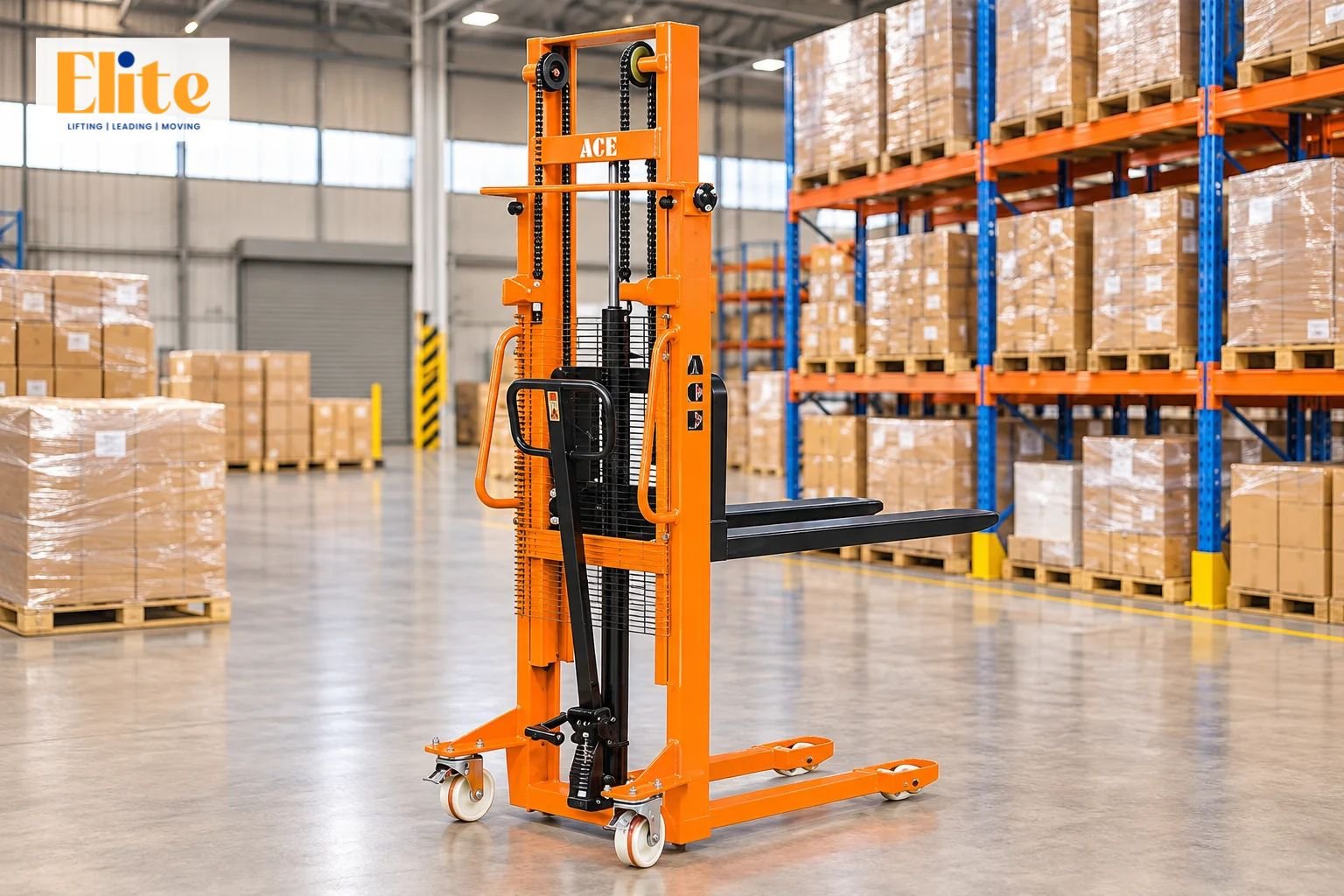
Businesses that handle pallets occasionally need material handling equipment that suits their workload without adding unnecessary complexity to daily operations. A manual stacker can be a practical option for lifting, positioning, and stacking palletized goods when handling frequency, load weight, and working conditions are appropriate.
However, choosing the right manual stacker requires more than comparing prices. Buyers must consider load capacity, lifting height, fork dimensions, warehouse layout, operator effort, safety, and maintenance requirements.
This guide explains how to select a manual stacker for low-frequency pallet handling applications and what warehouse managers and procurement teams should evaluate before requesting a quotation.
A manual stacker is a type of material handling equipment designed to lift and position compatible palletized loads. Depending on the model, it may use a hydraulic mechanism for lifting and manual movement for transportation.
For facilities with occasional pallet handling requirements, a manual stacker may be suitable when powered equipment is not necessary for the workload.
Typical applications include:
The suitability of a manual stacker depends on the maximum load weight, required lifting height, movement distance, and frequency of use. Businesses handling pallets continuously throughout the day should also evaluate semi-electric or electric alternatives.
Load capacity is one of the most important specifications to check when purchasing a manual stacker machine. Determine the maximum gross weight of the pallet, including its contents and the pallet itself.
Compare this weight with the equipment’s rated capacity. Do not select a model based only on average loads because heavier pallets may exceed the machine’s limits.
Also, confirm whether the rated capacity changes with lifting height or load centre. The selected equipment must be suitable for the actual load configuration rather than simply meeting a general weight requirement.
The required lifting height depends on how and where pallets are stored. Before purchasing, measure the height needed for stacking, loading, unloading, or positioning goods.
Consider rack levels, overhead clearance, pallet height, and the space available above the load. A stacker that cannot reach the required level may restrict warehouse operations, while unnecessary lifting capability may increase costs without providing practical benefits.
Ask the supplier to confirm the model’s maximum lifting height and any applicable capacity restrictions.
Fork length, width, spacing, and adjustment options determine whether the equipment can safely handle your pallets.
Measure your pallet dimensions and check the entry openings to ensure the forks can be positioned correctly. Businesses using multiple pallet sizes should verify compatibility for each type before ordering.
Incorrect fork dimensions can make loading difficult and affect load stability. Providing accurate pallet measurements during the purchasing process helps the supplier assess the application more effectively.
A manual stacker for warehouse applications must fit the available operating space. Check aisle width, turning areas, doorways, rack clearances, and access routes.
Consider the stacker’s overall dimensions and the room needed to position and move pallets safely. Also assess floor conditions because uneven surfaces, damaged flooring, and slopes can affect equipment movement.
For compact storage areas, confirm that the proposed model can manoeuvre safely without obstructing other warehouse activities.
Many manual stackers use hydraulic lifting systems. Buyers should understand how the lifting mechanism operates and how much physical effort is required during normal use.
Consider the weight of the loads, expected lifting frequency, and the effort involved in moving the equipment. A model may have sufficient rated capacity but still be unsuitable if operating it places excessive physical demands on employees.
Ask about the lifting and lowering controls, operating procedures, inspection requirements, and maintenance needs before making a purchase.
Check the equipment’s stability, braking arrangements, forks, controls, and other safety provisions relevant to the selected model. Confirm the manufacturer’s operating instructions and rated capacity.
Ask the supplier about routine maintenance, replacement parts, and the documentation supplied with the equipment. These considerations help buyers evaluate the overall suitability of the stacker beyond its initial price.
Choosing suitable warehouse stacking equipment requires an understanding of the facility’s layout and material flow.
First, identify where pallets are received, stored, moved, and dispatched. Determine how often lifting takes place, how far pallets travel, and the maximum height at which goods must be positioned.
Next, assess the storage arrangement. Check the available aisle width, floor condition, doorway clearance, pallet dimensions, and space around racks or workstations. If pallets must be placed on racks, verify that the selected equipment is designed for that application.
Before contacting a supplier, prepare the following checklist:
Providing this information helps the supplier evaluate your needs and recommend equipment for further consideration. It also makes quotations easier to compare because each supplier can assess the same operating requirements.
Manual operation does not eliminate the risks associated with lifting and moving heavy loads. Safe operation depends on suitable equipment, trained operators, regular inspections, and adherence to the manufacturer’s instructions.
Follow the manufacturer’s inspection procedure and check relevant components, including wheels, forks, hydraulic systems, controls, and brakes where fitted.
Look for visible damage, hydraulic leaks, worn parts, or unusual movement. Equipment suspected of being defective should be removed from service until it has been inspected and repaired appropriately.
Never exceed the rated capacity. Position the load correctly, use compatible pallets, and ensure the goods remain stable during lifting and movement.
Maintain clear visibility along the travel route and keep people away from suspended loads. Avoid unsafe manoeuvres and operating conditions that are outside the manufacturer’s recommendations.
Follow the recommended maintenance schedule for hydraulic components, wheels, forks, and other relevant parts. Arrange appropriate servicing and repairs when required, and maintain records of inspections and maintenance activities.
Understanding these requirements before purchasing helps businesses plan equipment upkeep and maintain safer warehouse operations.
Several purchasing mistakes can lead to unsuitable equipment or unnecessary operating difficulties.
Choosing insufficient capacity: Always consider the heaviest expected pallet rather than the average load.
Ignoring lifting height: Confirm that the equipment can reach the required working level while meeting applicable capacity restrictions.
Overlooking pallet dimensions: Check fork compatibility with every pallet type used in the facility.
Neglecting warehouse layout: Evaluate aisle width, turning space, floor conditions, and storage clearance before selecting a model.
Choosing manual equipment for intensive workloads: Repeated lifting or long travel distances may justify evaluating powered alternatives.
Comparing suppliers only on price: Consider specifications, safety information, maintenance requirements, and parts availability alongside the quotation.
Avoiding these mistakes allows procurement teams to make better-informed purchasing decisions.
Selecting the right supplier is an important step in finding equipment that matches your operational needs. Buyers should review relevant product information and confirm that the equipment’s specifications suit their intended application.
Elite Group India supplies material handling and warehouse equipment for businesses evaluating solutions for their facilities. Explore the manual stacker range to review relevant product information.
Businesses considering other handling solutions can also explore warehousing equipment to compare equipment categories.
When enquiring, share your maximum pallet weight, required lifting height, pallet dimensions, handling frequency, and warehouse layout. These details help establish whether a manual stacker is appropriate or whether another equipment type should be considered.
A manual stacker can be a practical option for low-frequency pallet handling when its capacity, lifting height, dimensions, and operating characteristics match the application.
Before purchasing, assess your warehouse layout, pallet specifications, operator requirements, and expected workload. Consider safety and maintenance alongside the initial investment to make a well-informed decision.
Looking for a Manual Stacker for Your Warehouse?
Share your pallet weight, required lifting height, pallet dimensions, and expected handling frequency with Elite Group India. Visit the manual stacker product page or contact the team through the official website to discuss your requirements and request a quotation.
Check load capacity, lifting height, fork dimensions, pallet compatibility, aisle width, floor conditions, safety features, and maintenance requirements. These factors help determine whether the equipment suits your warehouse.
A manual stacker may suit occasional pallet lifting and stacking when loads, lifting height, and working conditions fall within its specifications. High-frequency operations may require powered alternatives.
Calculate the maximum gross pallet weight, including the pallet and its contents. Confirm that the rated capacity is suitable for the intended load and lifting configuration.
A manual stacker generally uses manually operated lifting and movement, whereas an electric stacker uses powered functions according to its configuration. Electric equipment may reduce operator effort during frequent handling.
Assess pallet weight, lifting height, pallet dimensions, aisle width, floor conditions, and handling frequency. Share these details with a supplier to identify suitable equipment and verify its specifications.
Elite Group India
Your message matters — we reply quickly
Any questions related to Manual Stacker Purchase Guide for Low-Frequency Pallet Handling Applications?
WhatsApp Us
Online | Privacy policy
WhatsApp us