
Elite Handling Solution » Reach Truck Selection for High-Rack Storage and Narrow-Aisle Warehouses
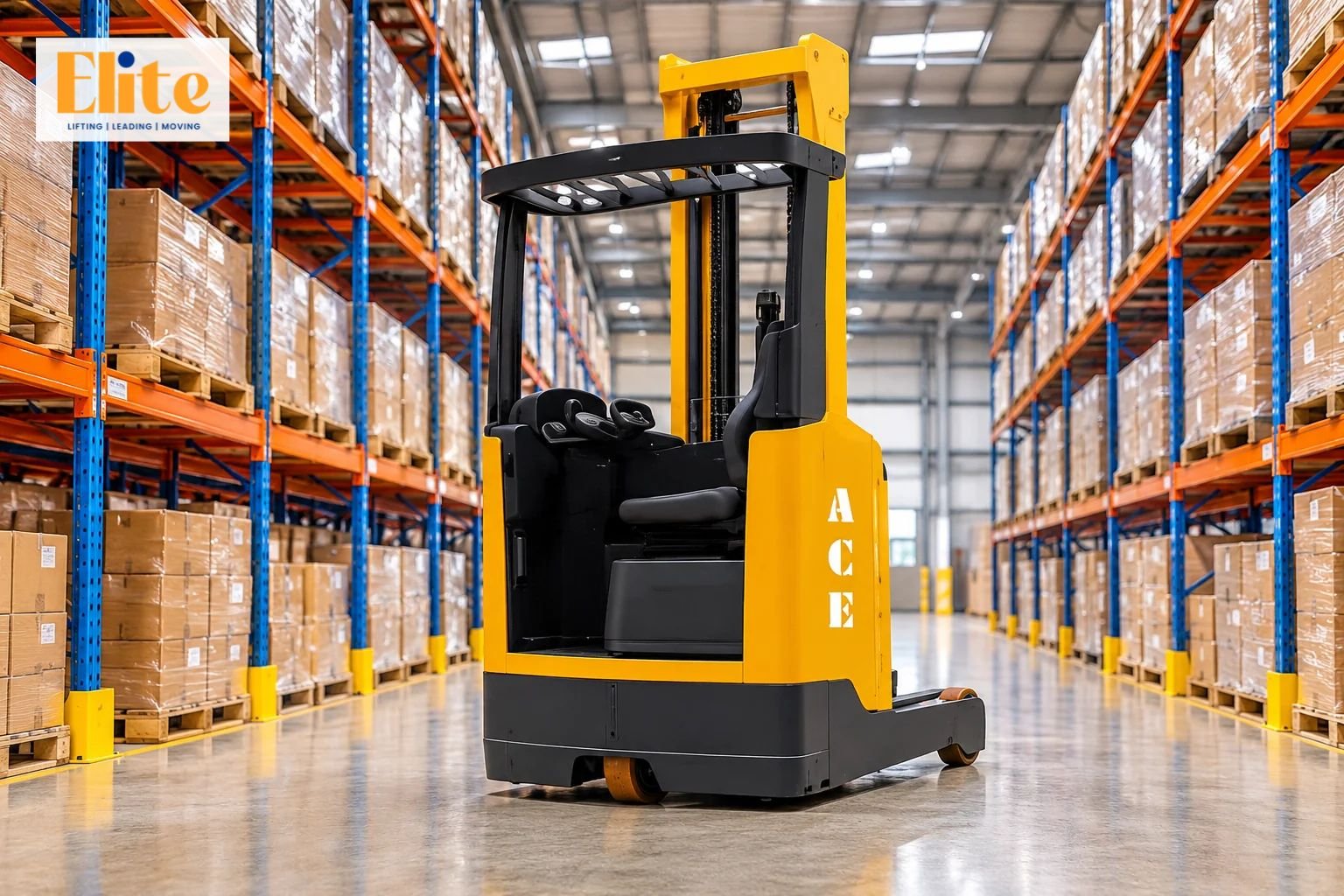
Selecting the right reach truck is essential for warehouses that need to maximise vertical storage, improve pallet handling, and operate efficiently within limited aisle space. The right equipment can help businesses manage inventory movement, access high-level storage locations, and make better use of available warehouse space.
For warehouse managers, logistics companies, manufacturing facilities, and distribution centres, reach truck selection involves more than comparing purchase prices. Load capacity, lifting height, aisle width, pallet dimensions, battery performance, and warehouse layout all influence equipment suitability.
A reach truck for warehouse operations must match the facility’s actual requirements. Evaluating these factors before purchasing helps businesses identify suitable equipment, reduce operational limitations, and make informed investment decisions. This guide explains the key considerations for selecting an industrial reach truck for high-rack storage and narrow-aisle applications.
High-rack storage systems allow businesses to store palletised goods vertically, making better use of available floor space. However, accessing elevated pallet positions requires material handling equipment that can lift loads safely while manoeuvring within the warehouse layout.
A reach truck is designed to handle palletised loads using a reach mechanism that extends or retracts the forks and load. Depending on the model, it can support storage and retrieval operations in warehouses with compatible racking systems and relatively narrow aisles.
The main advantages of selecting a suitable reach truck include:
The actual benefits depend on the selected model, load requirements, operating conditions, and warehouse design.
Before comparing reach truck models, identify the facility’s material handling requirements. A clear assessment helps procurement teams evaluate specifications and obtain more relevant supplier recommendations.
Load capacity is one of the most important factors when selecting an industrial reach truck. Buyers should identify the maximum weight of the palletised goods handled during normal operations.
The truck’s rated capacity does not necessarily apply to every load at every lifting height. Load centre, mast configuration, attachments, and lifting height can affect the permitted load.
For example, a truck rated for a particular load at a lower height may have a lower permissible capacity when lifting that load to the highest rack position.
Before purchasing, confirm the maximum pallet weight, load dimensions, load centre, and intended storage height. Request the manufacturer’s load-capacity chart to verify that the selected reach truck can handle the heaviest expected load under actual operating conditions.
The required lift height determines whether the truck can access the highest storage position safely. Measure the top pallet storage level and consider the height of the pallet, goods, rack beams, and necessary clearances.
Check the truck’s maximum lifting height, mast configuration, lowered mast height, and residual capacity at elevation. Overhead obstructions such as ceilings, lighting fixtures, pipes, and sprinkler systems should also be considered.
For high-rack storage applications, buyers should confirm that the truck can lift the intended load to the required position without exceeding the manufacturer’s operating limits.
Aisle width directly affects how easily a reach truck can approach storage racks and position pallets. Narrow-aisle suitability must be verified for the specific model rather than assumed from the equipment category.
Measure the clear aisle width and consider pallet dimensions, rack spacing, turning movements, and load overhang. Compare these measurements with the manufacturer’s specified working aisle requirements.
The goal is to select a reach truck that can manoeuvre and position pallets safely without unnecessary restrictions. Reducing aisle width without checking equipment compatibility may create handling difficulties and affect warehouse productivity.
The warehouse environment plays an important role in equipment selection. Assess floor flatness, surface condition, gradients, turning areas, traffic routes, and distances between storage and dispatch zones.
Also check rack alignment, columns, doorways, pedestrian routes, and other obstacles that could restrict truck movement. Uneven or unsuitable floors may affect safe operation and equipment performance.
For a new warehouse, coordinate reach truck specifications with the proposed racking layout. For an existing facility, verify that the selected truck can operate within the available space and floor conditions.
Pallet dimensions influence fork compatibility, aisle requirements, and load positioning. Identify the standard pallet sizes used in the facility and determine whether oversized or irregular loads are handled regularly.
Loads should be stable, appropriately positioned, and compatible with the truck’s rated configuration. Uneven weight distribution or excessive pallet overhang can create handling risks, particularly at elevated storage positions.
Discuss fork dimensions, load centre, pallet entry direction, and non-standard loads with the supplier before finalising the equipment specification.
Electric reach trucks are commonly considered for indoor warehouse applications. However, battery selection should reflect the workload and charging arrangements.
Evaluate daily operating hours, shift patterns, handling frequency, battery technology, charging time, and available charging facilities. A warehouse operating multiple shifts may have different requirements from a facility with intermittent material handling activities.
Ask for model-specific battery and runtime information based on the expected operating conditions. This helps buyers determine whether the equipment can support their workflow without relying on generic performance claims.
Safety is essential when handling loads at height and manoeuvring through narrow aisles. Evaluate operator visibility, control layout, braking systems, warning devices, and available safety features.
The selected reach truck should be appropriate for the warehouse’s operating procedures, rack configuration, and load characteristics. Operator training, pedestrian segregation, routine inspections, and proper load-handling practices are also necessary for safe operation.
The initial purchase price is only one part of the cost of owning a reach truck. Buyers should consider scheduled maintenance, spare parts, battery replacement where applicable, operator training, and expected equipment utilisation.
Compare quotations using equivalent technical specifications. Check warranty conditions, maintenance requirements, service availability, and spare-parts support before making a decision.
Evaluating these factors helps procurement teams balance the initial investment with the expected long-term operating requirements.
Choosing a reach truck for narrow aisles requires coordination between equipment dimensions and warehouse design. Start by measuring aisle widths, documenting pallet sizes, and identifying the highest storage positions.
Next, verify the truck’s working aisle requirements, turning dimensions, lifting capability, and compatibility with the existing rack configuration.
Before purchasing, confirm that the truck can manoeuvre within the available space, position pallets accurately, and reach the required storage levels. Check floor conditions, rack clearances, and obstructions around columns and doorways.
For businesses planning a new facility, equipment selection should be coordinated with rack design. For warehouse upgrades, assess whether the proposed truck is compatible with the existing layout before reducing aisle widths or changing storage arrangements.
High-rack applications require particular attention to lifting performance and load stability. A reach truck that handles pallets effectively at lower levels may have different capacity limitations at greater heights.
When selecting a high-rack storage reach truck, verify maximum lift height, mast configuration, residual load capacity, and overhead clearances. Check that pallet dimensions, rack beam spacing, and storage positions are compatible with the equipment.
Identify the heaviest loads and the highest positions where those loads will be stored. Ask the supplier to confirm the truck’s suitability against the manufacturer’s load-capacity chart for these specific conditions.
This approach helps businesses select equipment based on actual warehouse requirements rather than relying solely on headline capacity figures.
Several mistakes can lead to unsuitable equipment choices and unnecessary operating costs.
Prepare a technical checklist and obtain confirmation of critical specifications before placing an order.
A reach truck is generally suitable for pallet storage and retrieval in compatible racking systems, particularly where vertical storage and aisle utilisation are priorities.
A conventional forklift may be appropriate for certain loading, outdoor handling, or general material movement applications, depending on its design. A stacker may suit lighter-duty pallet handling where its lifting height, capacity, and operating arrangement meet the requirements.
The correct equipment depends on load weight, storage height, travel distance, aisle dimensions, and handling frequency. Businesses can explore the warehousing equipment range to evaluate different equipment categories for their operations.
Selecting the right industrial reach truck starts with understanding the warehouse’s operating conditions and matching them with suitable equipment specifications.
Elite Group India provides a point of contact for businesses evaluating material handling and warehousing equipment. Buyers can explore the reach truck product page and enquire about suitable options for their requirements.
To make the selection process more effective, prepare details about maximum load weight, required lifting height, aisle width, pallet dimensions, operating hours, and the existing rack layout. Providing this information helps establish a clearer basis for discussing equipment suitability.
For additional equipment requirements, visit the Elite Group India website to explore the company’s offerings.
Effective reach truck selection requires careful evaluation of load capacity, lifting height, aisle width, pallet dimensions, battery requirements, safety, and maintenance support. These factors determine whether the equipment can meet the warehouse’s operational demands and work within its storage layout.
For high-rack storage and narrow-aisle applications, verify the manufacturer’s specifications for the intended load and lifting height before purchasing. A structured assessment can help businesses compare suitable options and make informed procurement decisions.
Looking for the Right Reach Truck for Your Warehouse?
Whether you are expanding storage capacity, planning a narrow-aisle layout, or upgrading existing material handling equipment, Elite Group India can be your starting point for discussing reach truck requirements.
Contact Elite Group India to discuss your load capacity, lifting height, aisle width, and warehouse layout requirements, and enquire about suitable reach truck solutions.
Explore the reach truck product page to get started.
Evaluate load weight, lifting height, aisle width, pallet dimensions, floor conditions, operating hours, and maintenance requirements. Confirm that the selected model meets these requirements using the manufacturer’s specifications.
The required capacity depends on the heaviest load, load centre, attachments, and lifting height. Check the manufacturer’s load-capacity chart to verify suitability at the intended storage position.
Measure the available aisle space and consider pallet dimensions, rack configuration, turning requirements, and load overhang. Compare these details with the manufacturer’s working aisle specifications.
Review battery technology, expected runtime, charging arrangements, lifting requirements, safety features, and maintenance needs. Match the specifications to the facility’s workload and shift patterns.
Residual load capacity indicates the load a truck can handle under specified operating conditions. It is important because the permissible load may decrease at greater lifting heights or with different load centres and attachments.
Elite Group India
Your message matters — we reply quickly
Any questions related to Reach Truck Selection for High-Rack Storage and Narrow-Aisle Warehouses?
WhatsApp Us
Online | Privacy policy
WhatsApp us